Penn State Food Safety Blog

Friday, February 28, 2014

FDA has deadlines set for FSMA rules

We now have some deadlines set for FSMA final rules, with Preventive Controls for food in August of 2015 and Produce in October of 2015.   So it will follow, that the deadlines for companies to implement those rules will also be kicked down the road even further.

But this is no reason for companies not to begin the development and implementation of food safety systems based upon best practices. 


The Packer
FDA agrees to firm food safety law deadlines
 
02/26/2014 03:14:00 PM
Tom Karst
 
http://www.thepacker.com/fruit-vegetable-news/FDA-agrees-to-firm-food-safety-law-deadlines-247322601.html
  
The Food and Drug Administration has agreed to deadlines on final food safety rules mandated by the Food Safety Modernization Act.
 
The consent agreement (http://bit.ly/1o1bc8K), issued by the U.S. District Court in the Northern District of California, appears to be the final chapter on a legal action brought against the FDA by consumer activist groups. The Center for Food Safety and the Center for Environmental Health filed a lawsuit in August 2012 charging that the FDA illegally missed deadlines for food safety rules set by Congress in the 2011 Food Safety Modernization Act.

Read more »
Posted by mwb124 at 2:16 PM No comments:
Email ThisBlogThis!Share to XShare to FacebookShare to Pinterest
Labels: FDA, fsma

2012 Norovirus Outbreak in Germany Linked to Imported Frozen Strawberries

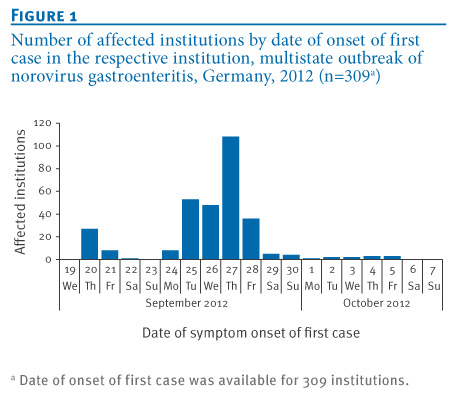
 A report details the 2012 outbreak of Norovirus in Germany where approximately 11,000 cases were reported.   The report concludes that fresh frozen strawberries imported from China were the food vehicle.

Because the fruit is fresh frozen, there are no destructive processes such as heat to remove or reduce Norovirus.  Keys to prevention for the grower / packer are having good personal hygiene programs including employee health policies, and systems to maintain potable wash water.

For the broker or the purchaser, supplier control should include ways to ensure that the grower/packer have these programs in place, especially for these minimally processed RTE items.  Testing for Norovirus in not commonly done.

Eurosurveillance
Volume 19, Issue 8, 27 February 2014
Surveillance and outbreak reports
Large multistate outbreak of norovirus gastroenteritis associated with frozen strawberries, Germany, 2012

http://www.eurosurveillance.org/ViewArticle.aspx?ArticleId=20719
H Bernard1,2, M Faber ()1,2, H Wilking 1, S Haller1,3,4, M Höhle1, A Schielke1, T Ducomble1,4,5, C Siffczyk6, S S Merbecks7, G Fricke8, O Hamouda1, K Stark1, D Werber1, on behalf of the Outbreak Investigation Team9
From 20 September through 5 October 2012, the largest recorded food-borne outbreak in Germany occurred. Norovirus was identified as the causative agent. We conducted four analytical epidemiological studies, two case–control studies and two surveys (in total 150 cases) in secondary schools in three different federal states. Overall, 390 institutions in five federal states reported nearly 11,000 cases of gastroenteritis. They were predominantly schools and childcare facilities and were supplied almost exclusively by one large catering company. The analytical epidemiological studies consistently identified dishes containing strawberries as the most likely vehicle, with estimated odds ratios ranging from 2.6 to 45.4. The dishes had been prepared in different regional kitchens of the catering company and were served in the schools two days before the peaks of the respective outbreaks. All affected institutions had received strawberries of one lot, imported frozen from China. The outbreak vehicle was identified within a week, which led to a timely recall and prevented more than half of the lot from reaching the consumer. This outbreak exemplifies the risk of large outbreaks in the era of global food trade. It underlines the importance of timely surveillance and epidemiological outbreak investigations for food safety.
Posted by mwb124 at 1:23 PM No comments:
Email ThisBlogThis!Share to XShare to FacebookShare to Pinterest
Labels: Europe, norovirus, produce, strawberries

Monday, February 24, 2014

Over addition of vitamin leads to illness associated with rice product

Earlier this February, Uncle Bens Rice product was recalled after there were a number of cases of illness. It appears that the issue was that the product had excessive niacin addition. "The FDA said overexposure to niacin can cause skin reactions, and very large doses can cause indigestion and nausea."

There are a number of chemicals that are added to food that can become hazards if these chemicals are not added in the right concentrations, including vitamins and minerals.
Along with Niacin (Vitamin B3), other vitamins that can be problematic from over addition include  Vitamin A, Vitamin B6, and Vitamin E.  Certain minerals such as iron and zinc can also be a problem if there is excessive intake.

Over dosage can be a problem with gummy vitamins, where kids treat the vitamins like candy.

For food processing operations who add chemicals such as vitamins and minerals, it is important to include this in the hazard analysis.  One needs to evaluate whether a chemical hazard could occur through over addition.


 CBS News
Feds warn against eating some Uncle Ben's rice

http://www.cbsnews.com/news/feds-warn-against-eating-some-uncle-bens-rice/

WASHINGTON -- The Food and Drug Administration is warning against eating Uncle Ben's rice products served at schools, restaurants, hospitals and other food service institutions after children in three states had skin reactions and other symptoms that were linked to the rice.

Mars Foodservices, of Rancho Dominguez, Calif., is recalling 5- and 25-pound bags of the rice. The bags are mostly sold to food service establishments, but they are also available to consumers over the Internet and in some warehouse-type retailers.

Uncle Ben's ready-to-eat, boxed, bagged and cup products in grocery stores are not linked to the illnesses and have not been recalled.

The FDA said 34 students and four teachers in Katy, Texas, had experienced burning, itching rashes, headaches and nausea for 30 to 90 minutes after eating the rice on Feb. 6. The symptoms eventually went away.

The agency said it is still investigating the Texas incident. But FDA officials said they found an excess of niacin, also known as vitamin B3, in Uncle Ben's food service rice linked to similar reactions in 25 Illinois school children in December. That incident also prompted a recall, but the Texas illnesses were not related to those previously recalled lots.

The FDA said overexposure to niacin can cause skin reactions, and very large doses can cause indigestion and nausea. Children may be most susceptible, but the agency said the levels of niacin found in the Illinois rice samples probably were not high enough to cause serious health consequences.
Read more »
Posted by mwb124 at 8:31 AM No comments:
Email ThisBlogThis!Share to XShare to FacebookShare to Pinterest
Labels: chemical hazards

Food Workers Likely to Work When Sick

 A recent study reports that many Americans will go to work while they are sick, unfortunately, many of those may be people who work with food.

Therefore, it is important that food workers, as well as their managers, understand the risks.  Companies who work with food, whether they are food service, retail, or processing, need to have strict guidelines on how to handle sick workers.  FDA provides a Health and Hygiene Handbook for food employees.

 
LA Times
More than 1 in 4 Americans go to work while sick
http://www.latimes.com/business/money/la-fi-mo-sick-work-20140220,0,516288.story#axzz2tye0MQha
By Shan Li
 
February 20, 2014, 11:56 a.m.
 
More than one in four Americans are so afraid of missing work that they head into the office even when sniffling and sneezing, a study says.
  
Many are worried about falling behind on their jobs, missing pay or facing the wrath of bosses who expect them to show up no matter what, according to a survey by NSF International, which tests and certifies public health products.

Read more »
Posted by mwb124 at 8:03 AM No comments:
Email ThisBlogThis!Share to XShare to FacebookShare to Pinterest
Labels: personal hygiene

Michigan Farmer Sentenced for Selling Contaminated Apple Juice

 A Michigan farmer was convicted for selling adulterated apple cider.  In 2012, this farmer's juice was linked to an outbreak of E. coli O157:H7, where 4 individuals became ill, two of those were children.

E. coli O157:H7 contamination in juice is the primary reason that HACCP regulations were enacted over 10 years ago.  The Food Code details the requirements for the need of a HACCP plan.  In complying, one would need to have a pathogen reduction step if they were going to sell bottled juice.  This could be a heating step or a UV light treatment.  See Penn State's Juice Resources for more information.

 E. coli, a enteric pathogen associated with ruminant animals such as cows and deer, can contaminate apples through cross-contamination, especially when 'drop' apples are used (apples that are harvested after they have fallen to the ground.)  E.coli O157:H7 is tolerant to the acidic conditions, and so can survive in apple juice.


Michigan Department of Agriculture and Rural Development News Release
Mitchell Hill Farm in Ellsworth Receives First-Ever Felony Conviction Under Michigan's Food Law

Agency: Agriculture and Rural Development
http://michigan.gov/mdard/0,4610,7-125-1572_28248-322547--,00.html

For immediate release: February 21, 2014
Media contact: Jennifer Holton, 517-284-5724 or holtonj@michigan.gov

Cider Producer Mitchell Hill Farm in Ellsworth Receives First-Ever Felony Conviction Under Michigan’s Food Law

After nearly two years of investigation and legal action, James Ruster, owner of Mitchell Hill Farm in Ellsworth, was sentenced on February 18, 2014, for one felony violation of Michigan’s Food Law, the first-ever felony conviction under this law.
Read more »
Posted by mwb124 at 7:40 AM No comments:
Email ThisBlogThis!Share to XShare to FacebookShare to Pinterest

Listeria Outbreak Linked to Soft Cheese

UPDATE - 2/25/14 - Roos Foods has expanded their recall.

Soft cheese made by a Delaware company has been linked to a Listeria outbreak, with one death and seven ill.  Product tested by VA Department of Agriculture was found to be positive for Listeria monocytogenes.  The company is recalling a variety of their cheeses.

Listeria monocytogenes has been related to other outbreaks in soft cheese.  This organism is more likely to cause illness in those from high risk groups, such as elderly, infants and young children, and pregnant women.  Once infected, the illness can be very serious, leading to septicemia (blood infection) and meningitis, and even death.

Roos Foods is a small family owned processor located in rural Kenton DE.  From the company website, the facility appears to be small.  They focus on producing South American type of cheeses. 


EXPANDED - Roos Foods Voluntarily Recalls Variety of Cheeses (listed below) Due to Possible Health Risk


FOR IMMEDIATE RELEASE - February 25, 2014 - Update: Roos Foods has voluntarily expanded their February 23, 2014 recall to include all lots of Amigo and Mexicana brands of Requesón (part-skim ricotta in 15 oz. and 16 oz. plastic containers and all lots of Amigo, Mexicana and Santa Rosa De Lima brands of Queso de Huerta (fresh curd cheese).

Roos Foods, Kenton De Recalls ALL LOTS of the Following Cheeses:

Mexicana: Cuajada En Terron, Cuajada/Cuajadita Cacera, Cuajada Fresca, Queso Fresca Round, Queso Dura Viejo Hard Cheeses; Amigo: Cuajada En Terron, Cuajada/Cuajadita Cacera, Cuajada Fresca, Queso Fresca Round, Queso Dura Viejo Hard Cheeses; Santa Rosa De Lima: Cuajada En Terron, Cuajada/Cuajadita Cacera, Cuajada Fresca, Queso Fresca Round, Queso Dura Viejo Hard Cheeses and Anita Queso Fresco Because Of Possible Health Risk.

Roos Foods of Kenton, DE is recalling the above cheeses because they have the potential to be contaminated with Listeria monocytogenes, an organism which can cause serious and sometimes fatal infections in young children, frail or elderly people, and others with weakened immune systems. Although healthy individuals may suffer only short-term symptoms such as high fever, severe headache, stiffness, nausea, abdominal pain and diarrhea, Listeria infection can cause miscarriages and stillbirths among pregnant women. Products were distributed in Maryland, Virginia and Washing ton D.C through retail stores.

The products are packaged in flexible plastic bags and rigid plastic clam shell packages in 12 oz. and 16 oz. sizes under the brand names: Mexicana, Amigo, Santa Rosa De Lima, and Anita.

As a follow-up to reported illness, samples of various intact/unopened cheeses produced or repacked by Roos Foods, Inc., collected by the Commonwealth of Virginia Dept of Agriculture & Consumer Services and Maryland Dept. of Health and Mental Hygiene found to contain Listeria monocytogenes which appear to be linked to the illnesses.

The company has ceased the production and distribution of the products as FDA and the company continue their investigation as to what caused the problem.

Customers should destroy all lots of the above listed products of the brand names Mexicana, Amigo, Santa Rosa De Lima and Anita. For any refund, please return recalled products to store.

If you have any further questions please contact Virginia Mejia phone number (302) 653-8458. Monday thru Friday from 9 am to 3 pm EST.

FDA News Release
Roos Foods Voluntarily Recalls Variety of Cheeses (listed below) Due to Possible Health Risk

Roos Foods, Kenton De Recalls ALL LOTS of the Following Cheeses Mexicana: Cuajada En Terron, Cuajada/Cuajadita Cacera, Cuajada Fresca, Queso Fresca Round, Queso Dura Viejo Hard Cheeses; Amigo: Cuajada En Terron, Cuajada/Cuajadita Cacera, Cuajada Fresca, Queso Fresca Round, Queso Dura Viejo Hard Cheeses; Santa Rosa De Lima: Cuajada En Terron, Cuajada/Cuajadita Cacera, Cuajada Fresca, Queso Fresca Round, Queso Dura Viejo Hard Cheeses and Anita Queso Fresco Because Of Possible Health Risk

Contact
Media:
Virginia Mejia
302-653-8458

FOR IMMEDIATE RELEASE – February 23, 2014 – Roos Foods of Kenton, DE is recalling the above cheeses because they have the potential to be contaminated with Listeria monocytogenes, an organism which can cause serious and sometimes fatal infections in young children, frail or elderly people, and others with weakened immune systems. Although healthy individuals may suffer only short-term symptoms such as high fever, severe headache, stiffness, nausea, abdominal pain and diarrhea, Listeria infection can cause miscarriages and stillbirths among pregnant women.
Read more »
Posted by mwb124 at 6:41 AM No comments:
Email ThisBlogThis!Share to XShare to FacebookShare to Pinterest
Labels: cheese, listeria

Wednesday, February 19, 2014

Rancho Meat recall leading to a cascade of recalls?

In light of the recall of meat produced by Rancho Feeding Corp, now comes the recalls of the products that were made with the meat from that facility.    Nestle is recalling 2 brands of Hot Pockets.  In Canada, beef and cheese taquitos were recalled (they were manufactured by a Californian processor).

 One has to hope that these downstream recalls are tied to a real safety issue.  To date, we have not seen any statement issued from USDA outside of the fact that  the meat was produced without inspection.  While that should not have happened, it is unclear at this point whether any product is actually harmful.

As for highly processed foods like Hot Pockets, heat treatment of the filling would have eliminated most all hazards, especially those of most concern, pathogens such as E. coli STEC and Salmonella.  (What?  Hot Pockets are highly processed?)

CNN
USDA closes school lunch supplier; some Hot Pockets recalled

By Ed Payne and Chandler Friedman, CNN
updated 3:30 PM EST, Wed February 19, 2014
http://www.cnn.com/2014/02/19/health/hot-pockets-recall/
CNN) -- The U.S. Department of Agriculture has withdrawn its inspectors and suspended operations at a California meat company because of "insanitary conditions at the establishment," the department's Food Safety and Inspection Service said Wednesday.

The Central Valley Meat Co. in Hanford, California, supplies beef for federal school nutrition programs. In 2011, it provided nearly 21 million pounds of beef, or nearly 16% of the supply.

"The plant's suspension will be lifted once we receive adequate assurances of corrective action," a USDA statement said.

Meanwhile, Nestlé USA has issued a recall of two varieties of Philly Steak and Cheese Hot Pockets because they may contain meat the department has already recalled.

The two brands are Hot Pockets brand Philly Steak and Cheese in three different pack sizes, and Hot Pockets brand Croissant Crust Philly Steak and Cheese in the two-pack box.

For the exact batch code, please check this release.

Earlier, the USDA had recalled more than 8.7 million pounds of meat from the Rancho Feeding Corp. because it "processed diseased and unsound animals and carried out these activities without the benefit or full benefit of federal inspection."

No illnesses have been reported in relation to the recall.
Read more »
Posted by mwb124 at 1:05 PM No comments:
Email ThisBlogThis!Share to XShare to FacebookShare to Pinterest
Labels: recall, usda

Washington State firm recalls dried egg product due to the potential for Salmonella contamination

A Washington State company, Nutriom, is recalling 226,710 pounds of processed egg products due to potential salmonella contamination.  The issue was discovered by Washington State Laboratories.  To date, there have been no illnesses reported.

A processed egg product should not have Salmonella.   Why no illnesses?  For one, the contamination rate may be very low.  From the report, we cannot tell to what degree the product was contaminated.  Second, the eggs were probably used in applications that required further heating.


 USDA News Release
Washington Firm Recalls Dried Egg Products Due to Possible Salmonella Contamination
Class I Recall 015-2014
Health Risk: High Feb 15, 2014
 http://www.fsis.usda.gov/wps/wcm/connect/FSIS-Content/internet/main/topics/recalls-and-public-health-alerts/recall-case-archive/archive/2014/recall-015-2014-release
Congressional and Public Affairs
Joan Lindenberger
(202) 720-9113
 
WASHINGTON, Feb. 15, 2014 – Nutriom LLC, a Lacey, Wash., establishment, is recalling approximately 226,710 pounds of processed egg products that may be contaminated with Salmonella, the U.S. Department of Agriculture’s Food Safety and Inspection Service (FSIS) announced today.
 
Read more »
Posted by mwb124 at 12:43 PM No comments:
Email ThisBlogThis!Share to XShare to FacebookShare to Pinterest
Labels: eggs, recall, salmonella

Friday, February 14, 2014

Meat Plant Coming to a Town Close to You, Maybe Not

Why do we get our food from overseas?  A proposal to put a meat plant in a small town in NY has come under fire from critics.  Some of the questions posed are valid, but others worry about the potential smell.   Putting the address into Google Maps, I noted that the potential site is on the
outskirts of town, in a mostly industrial area.

So we all want more jobs and we want to buy local food, but there can’t be any negatives that affect anybody.


Meat packaging plant could be coming to East Dominick Street

Published: Wednesday, February 12, 2014
By Kristin Clark
Staff Writer
Twitter.com/RO_Kristin
  http://www.romeobserver.com/articles/2014/02/12/news/doc52fbee491d115835490627.txt?viewmode=3        

ROME – East Dominick Street may soon be home to a new meat packaging plant. First ward councilperson Lori Trifeletti and many city officials have been working diligently on this project.

The plant, which has been proposed to the city by Tino Marcoccia, a developer from Syracuse, is still in the preliminary stages.

“Nothing will be moving forward until we have a business plan,” Trifeletti said.

Marcoccia did estimate that the plant could create as many as 250 new jobs. The jobs will vary in pay rate from minimum wage to around $30 an hour. Trifeletti added that there will be two USDA inspectors and veterinarians on site at all times.

The proposed plant was already brought before the zoning board in January, but was voted down 3-2. Trifeletti said that it will go before the board again in March.
Read more »
Posted by mwb124 at 1:48 PM No comments:
Email ThisBlogThis!Share to XShare to FacebookShare to Pinterest

Salmonella as an Adulterant in Raw Poultry

In October, Foster Farms poultry was linked to an outbreak of Salmonella but never recalled the product.   Many were outraged that Foster Farms did not recall the product, although Costco did recall cooked chicken product where the Foster Farm poultry was used.

Dr. Mel Kramer reviews (below) why Foster Farms did not recall product.  It hinges on the fact that Salmonella is not viewed (currently) as an adulterant.  This is because it naturally has the potential to be present on the raw poultry.

In another article, Dr. Nelson Cox discusses Zero Tolerance of Salmonella in Poultry.  Along the same lines, but viewed from an international trade standpoint.   There are those that argue that some European countries have gone a long way at reducing Salmonella in poultry, but as Dr. Cox points out, this may be difficult from an economic standpoint.  And even if we did reduce it, I believe we would still need to assume that there is still the risk that it is present.


Raw Poultry: Legal History, Public Policy, and Consumer Behavior
By Dr. Mel Kramer | February 14, 2014
http://www.foodsafetynews.com/2014/02/raw-poultry-the-legal-history-public-policy-and-consumer-behavior/#.Uv58_qMo59B

The U.S. Centers for Disease Control and Prevention (CDC) reported that, “as of January 15, 2014, a total of 430 persons infected with seven outbreak strains of Salmonella Heidelberg have been reported from 23 states and Puerto Rico.” In response to the news, the popular media, the technical and professional public health and consumer publications, including the blogosphere, have weighed in with opinions.

The question is whether or not the poultry producer should have voluntary recalled the raw chicken, which, based on epidemiologic, laboratory, and traceback investigations conducted by local, state, and federal officials, indicated that “consumption of Foster Farms brand chicken is the likely source of this outbreak of Salmonella Heidelberg infections.” This question is not only multi-faceted, but has a rich history from a public health, public policy and legal perspective dating back to the early 1970s.
Read more »
Posted by mwb124 at 1:44 PM No comments:
Email ThisBlogThis!Share to XShare to FacebookShare to Pinterest

Thursday, February 13, 2014

California company recalls meat that was produced without inspection

 A California meat processor is recalling meat after a USDA investigation found that the company had processed meat without inspection.  A second investigation was conducted.  USDA indicated that the meat was “unsound, unwholesome or otherwise are unfit for human food”.  The company is recalling all the meat produced in 2013, which is a reported 8.7 million pounds.  The company has ceased operations and many local ranchers fear that the processing facility will go out of business, forcing them to find other ways of handling their cattle.
 
USDA News Relase
California Firm Recalls Unwholesome Meat Products Produced Without the Benefit of Full Inspection
Class I Recall 013-2014 (UPDATE)
Health Risk: High Feb 18, 2014
 
WASHINGTON, Feb. 18, 2014 – Rancho Feeding Corporation, a Petaluma, Calif. establishment, is recalling approximately 8,742,700 pounds, because it processed diseased and unsound animals and carried out these activities without the benefit or full benefit of federal inspection. Thus, the products are adulterated, because they are unsound, unwholesome or otherwise are unfit for human food and must be removed from commerce, the U.S. Department of Agriculture’s Food Safety and Inspection Service (FSIS) announced today.
 
The following Rancho Feeding Corporation products are subject to recall:
  • Beef Carcasses” (wholesale and custom sales only)
  • 2 per box "Beef (Market) Heads" (retail only)
  • 4-gallons per box "Beef Blood" (wholesale only)
  • 20-lb. boxes of “Beef Oxtail”
  • 30-lb. boxes of “Beef Cheeks”
  • 30-lb. boxes of " Beef Lips"
  • 30-lb. boxes of "Beef Omasum"
  • 30-lb. boxes of "Beef Tripas"
  • 30-lb. boxes of "Mountain Oysters"
  • 30-lb. boxes of "Sweet Breads”
  • 30- and 60-lb. boxes of “Beef Liver”
  • 30- and 60-lb. boxes of “Beef Tripe”
  • 30- and 60-lb. boxes of “Beef Tongue”
  • 30- and 60-lb. boxes of "Veal Cuts"\
  • 40-lb. boxes of "Veal Bones"
  • 50-lb. boxes of “Beef Feet”
  • 50-lb. boxes of “Beef Hearts”
  • 60-lb. boxes of "Veal Trim"
 
Beef carcasses and boxes bear the establishment number "EST. 527" inside the USDA mark of inspection. Each box bears the case code number ending in “3” or “4.” The products were produced Jan. 1, 2013 through Jan. 7, 2014 and shipped to distribution centers and retail establishments nationwide.
 
FSIS has received no reports of illness due to consumption of these products. Anyone concerned about an illness should contact a health care provider.
 
FSIS routinely conducts recall effectiveness checks to verify that recalling firms notify their customers of the recall and that steps are taken to make certain that recalled product is no longer available to consumers. When available, the retail distribution list(s) will be posted on the FSIS website at: at www.fsis.usda.gov/recalls.
 
Consumers and members of the media who have questions about the recall can contact the plant’s Quality Control manager, Scott Parks, at (707) 762-6651.
 
Consumers with food safety questions can “Ask Karen,” the FSIS virtual representative available 24 hours a day at AskKaren.gov. The toll-free USDA Meat and Poultry Hotline 1-888-MPHotline (1-888-674-6854) is available in English and Spanish and can be reached from l0 a.m. to 4 p.m. (Eastern Time) Monday through Friday. Recorded food safety messages are available 24 hours a day. The online Electronic Consumer Complaint Monitoring System can be accessed 24 hours a day at: http://www.fsis.usda.gov/reportproblem.


Update: Second investigation launched into Rancho Feeding Corp.
By ROBERT DIGITALE
THE PRESS DEMOCRAT
http://www.petaluma360.com/article/20140211/COMMUNITY/140219907/-1/community?p=1&tc=pg

Published: Tuesday, February 11, 2014 at 4:50 p.m.
Last Modified: Tuesday, February 11, 2014 at 4:50 p.m.

A second office within the US Department of Agriculture has begun investigating a Petaluma slaughterhouse that has temporarily ceased operations while recalling a year's worth of processed beef, the agency reported Tuesday.


“USDA's Office of the Inspector General is conducting an ongoing investigation into Rancho Feeding Corporation,” said a statement released Tuesday by the agency's Food Safety and Inspection Service.

The statement noted that the administrator over the inspection service had separately “directed an immediate and thorough examination of the firm's practices, procedures and management.”

The 39-word statement was the most detailed to date on the agency's investigation of the North Bay's last remaining beef processing facility.

On Saturday the USDA announced that Rancho had initiated a recall of 8.7 million pounds of beef, essentially all the meat the company had processed in 2013.

In its news release, the agency asserted that Rancho “processed diseased and unsound animals” without a full inspection. The meat products are “unsound, unwholesome or otherwise are unfit for human food” and must be removed from commerce.

There are no reports of anyone becoming ill after eating the beef.

Robert Singleton, who owns Rancho with partner Jesse “Babe” Amaral, on Monday confirmed the company had voluntarily ceased processing and was compiling a list of affected companies. Singleton said the company undertook the recall out of “an abundance of caution” but declined comment on the government's allegations.

Other than the news release Saturday and the statement on Tuesday, officials with the US Department of Agriculture have declined to elaborate on the underlying reasons for the recall or the breadth of their investigation.

The recall affects all beef processed at Rancho between Jan. 1, 2013, and Jan. 7, 2014, a USDA spokesman said. The carcasses and other parts, commonly referred to as offal, were shipped to retailers and distributors in California, Florida, Illinois and Texas.

Last month the USDA announced that Rancho was recalling 41,683 pounds of meat produced on Jan. 8. The agency asserted that the meat didn't receive a full federal inspection.

You can reach Staff Writer Robert Digitale at 521-5285 or robert.digitale@pressdemocrat.com.

FOOD BUSINESS NEWS
California meat processor recalling a year’s production 
2/10/2014 - by Keith Nunes

http://www.foodbusinessnews.net/articles/news_home/Food_Safety_News/2014/02/California_meat_processor_reca.aspx?ID={39E6BB5C-DD5F-4312-8CB2-0F1768DF1FA3}

PETALUMA, CALIF. — Rancho Feeding Corp., a small California meat processor, is recalling all beef products processed between Jan. 1, 2013, to Jan. 7, 2014. The total amount is estimated to be in the range of 8.7 million lbs of product.

The recalled products were distributed to California, Florida, Illinois and Texas.

The U.S. Department of Agriculture’s Food Safety and Inspection Service said the recall was initiated because an investigation discovered the beef was processed without “the full benefit” federal inspection. Meat and poultry products that are shipped across state lines in the U.S. must be produced under federal inspection.

On Jan. 13, Rancho Feeding Corp. initiated a recall of 41,000 lbs of meat products that were produced without federal inspection on Jan. 8. A subsequent investigation by the F.S.I.S. revealed the issue to be much larger.

No illnesses have been associated with the recalled products, according to the F.S.I.S.
Posted by mwb124 at 1:04 PM No comments:
Email ThisBlogThis!Share to XShare to FacebookShare to Pinterest
Labels: recall, usda

Chick-fil-A plans to only use antibiotic free chickens

Chick-fil-A said it will put plans in place to ensure that its poultry products will not be raised with antibiotics.  It indicated it will take about 5 years to accomplish this goal.

While 5 years seems like a long time, the no-antibiotic claim is not an easy thing to accomplish.  Whether we like it or not, antibiotics are important in controlling disease in poultry.  A supply chain that requires the elimination of antibiotics must be stout enough to endure handling of a disease outbreak.  Also, farmers within the current supply chain may not want to make the same pledge, or may need to have alternative channels to move poultry if that flock should require antibiotic administration.

The administration of antibiotics must be controlled, no doubt, but complete elimination is not as easy as it sounds.


NEW YORK TIMESBusiness Day
Chick-fil-A Commits to Stop Sales of Poultry Raised With Antibiotics
By STEPHANIE STROMFEB. 11, 2014


Chick-fil-A said on Tuesday that within five years it would no longer sell products containing meat from chickens raised with antibiotics.

The company said consumer demand was responsible for the change. “We have an ongoing process of constantly monitoring what our consumers prefer in terms of health and nutrition and what’s in our food, and this issue surfaced as the No. 1 issue for our customers,” said Tim Tassopoulos, executive vice president for operations at Chick-fil-A.

A growing number of restaurant chains, including Chipotle and Panera Bread, have made commitments to serve meat only from animals raised without antibiotics, and consumers have responded enthusiastically.

The trend exemplified what Daymon Worldwide, a consulting firm that works with the food industry and others, has identified as “free-from,” a quest among consumers for pure and simple products, free of preservatives, highly processed ingredients and anything artificial.

Subway announced last week that it would eliminate azodicarbonamide, a chemical that commercial bakers use to increase the strength and pliancy of dough, but, as noted by the consumer crusader Vani Hari, is also used for the same purposes in yoga mats and shoe soles.

And on Tuesday, Kraft said it was taking sorbic acid, an artificial preservative that had come under attack by consumers, out of some individually wrapped cheese slices.

Those were among dozens of product changes announced by major food companies in the last year. “All of this is makes for great P.R., but it doesn’t mean the products are necessarily any more nutritious,” said Michele Simon, a public health lawyer who writes the blog eatdrinkpolitics.com

Ms. Simon said that Chick-fil-A’s decision was different because antibiotic resistance is such an important issue. “This doesn’t make fried chicken nuggets good for you, but given the public health crisis caused by the practice of giving animals antibiotics, I think this is an important decision,” she said.

Concern is growing among public health officials about the increase in antibiotic-resistant bacteria. Last fall, the Centers for Disease Control and Prevention for the first time quantified the toll such resistance is taking, estimating that at least two million Americans fall ill and at least 23,000 die from it each year.

The C.D.C. report said that “much of antibiotic use in animals is unnecessary and inappropriate and makes everyone less safe.” Then in December, the Food and Drug Administration announced a plan to curtail the use of antibiotics in animals.

Meat producers use antibiotics to prevent sickness in animals that are raised in close quarters in industrial farming operations. Chickens are treated, for example, with a small dose of gentamicin while still in ovo in an effort to prevent infection through a tiny hole made when the egg is administered a drug that prevents Marek’s disease and infectious bursal disease, highly infectious viral diseases that can wipe out flocks.

Antibiotics also are incorporated into feed commonly used by large producers to help animals grow faster and use feed more efficiently.

But producers are aware of the consumer demand for antibiotic-free meat. Bell & Evans, a smaller producer, has worked with its feed supplier to incorporate oregano into the kibble it feeds its chickens to act as a replacement for antibiotics, and Tyson last year started a line of chicken marketed under the label NatureRaised Farm, which is raised cage-free on a vegetarian diet without antibiotics.

Chick-fil-A already uses chicken breasts free from fillers, additives and steroids.

Rob Dugas, vice president for supply chain management at Chick-fil-A, said the shift would take time because it required changes by producers from the hatchery to the processing plant. “For instance, any flock treated with antibiotics today is aggregated into the larger production facility,” Mr. Dugas said. “For us, birds will have to be segregated all the way down to the egg production.”

Chick-fil-A executives said they could not say yet whether the changes would result in a price increase for consumers. Typically, antibiotic-free chicken is more expensive than traditionally processed poultry.

“We do know that it has a potential cost ramification, both to us and to our customers,” Mr. Tassopoulos said. “We are going to do everything we can to minimize the impact on the price of our products, and the growing interest in antibiotic-free meat may help with that by increasing

supplies.”
Posted by mwb124 at 12:51 PM No comments:
Email ThisBlogThis!Share to XShare to FacebookShare to Pinterest
Labels: antibioltic resistance, poultry

Wednesday, February 12, 2014

Making some Snow Ice Cream....Remember to use Safe Snow

With the endless parade of snowstorms hitting the northeast, it is always great to look for something creative to do with the snow.  Well, how about Snow Ice Cream.  Leave it to the celebrity chefs like Paula Dean to provide some food use for snow.

This sounds great, however, people being people, we need to attach some conditions on the snow that will be used.  (These celebrity chefs always forget to mention those risks).  We need to remember that snow may become contaminated and that can make us or our kids ill.
  • Always use freshly fallen snow.  The longer it sits, the greater the chances that snow will become contaminated.
  • Never use discolored snow, especially if it is yellow.  Or brown.  Or multicolored.
  • Do not use snow that is taken from around bird feeders, bird houses, or other places where birds may have pooped.
  • Speaking of poop....avoid snow that is around animal paw prints.  Remember, those are not Lincoln Logs (Toy Story 3 reference).
  • Do not take snow from areas close to roads or sidewalks where is a chance that road salt or deicing salts may have been used. 

Snow Ice Cream

http://www.foodnetwork.com/recipes/paula-deen/snow-ice-cream-recipe.html

Ingredients
8 cups snow, or shaved ice
1 (14-ounce) can sweetened condensed milk
1 teaspoon vanilla extract

Directions
Place snow or shaved ice into a large bowl. Pour condensed milk over and add vanilla. Mix to combine. Serve immediately in bowls.
Posted by mwb124 at 12:51 PM No comments:
Email ThisBlogThis!Share to XShare to FacebookShare to Pinterest
Labels: consumer

List of Food Items that can be Toxic to Dogs

The Wire Fox Terrier won the 2014 Westminster Dog Show this week, (good choice, although I was partial to the Bloodhound)
 
 
There have been a few news stories on Xylitol, an artificial sweetener, and its toxicity to dogs.  We thought this would be a good occasion to list some of the food items that have been shown to be harmful to your pooch.
 
  • Avocado and guacamole – contains a compound called persin that is toxic to dogs
  • Alcoholic beverages – Inability to quickly detoxify the alcohol
  • Bread Dough – Dough will rise in dogs stomach, also alcohol is produced as a byproduct.
  • Bones from poultry, fish, or other meat – can lead to laceration of the digestive system
  • Onions and Garlic, including onion powder – will destroy dog’s red blood cells         .
  • Caffeine – Coffee, Tea, Mountain Dew, Red Bull – caffeine is toxic to dogs 
  • Chocolate – contains theobromine which is toxic to dogs
  • Eggs, raw – reduces absorption of Vitamin B, also may contain Salmonella or parasites. Cook it first. Grapes or Raisins – can cause kidney failure
  • Hops - Unknown compound causes panting, increased heart rate, elevated temperature, seizures, and death
  • Macadamia nuts – toxic to dogs
  • Raw Meats and Fish – contain pathogens such as Salmonella
  • Milk or dairy products – inability to process large quantities of lactose leading to upset stomachs and diarrhea
  • Moldy foods - Can contain multiple toxins causing vomiting and diarrhea and can also affect other organs.
  • Pits from peaches and plums – can cause obstructions in digestive system as well as inflammation       
  • Salt – Excessive amounts can through electrolyte imbalance leading to vomiting, diarrhea, seizures.        
  • Sugary foods - excess sugar over the long term can lead to obesity, diabetes, and dental problems
  • Xylitol , artificial sweetener found in candy, gum, diet baked goods, and toothpaste – increases insulin causing blood sugar to rapidly drop
  • Other items that may be in the house or yard – string, mushrooms, tobacco, rhubarb leaves, citrus oil extracts
 
 From ASPCA website
Foods That Are Hazardous to Dogs
http://www.aspca.org/pet-care/virtual-pet-behaviorist/dog-behavior/foods-are-hazardous-dogs
 
Most dogs love food, and they’re especially attracted to what they see us eating. While sharing the occasional tidbit with your dog is fine, it’s important to be aware that some foods can be very dangerous to dogs. Take caution to make sure your dog never gets access to the foods below. Even if you don’t give him table scraps, your dog might eat something that’s hazardous to his health if he raids kitchen counters, cupboards and trash cans. For advice on teaching your dog not to steal food, please see our article, Counter Surfing and Garbage Raiding.
 
Avocado
Avocado leaves, fruit, seeds and bark may contain a toxic principle known as persin. The Guatemalan variety, a common one found in stores, appears to be the most problematic. Other varieties of avocado can have different degrees of toxic potential.
 
Birds, rabbits, and some large animals, including horses, are especially sensitive to avocados, as they can have respiratory distress, congestion, fluid accumulation around the heart, and even death from consuming avocado. While avocado is toxic to some animals, in dogs and cats, we do not expect to see serious signs of illness. In some dogs and cats, mild stomach upset may occur if the animal eats a significant amount of avocado flesh or peel. Ingestion of the pit can lead to obstruction in the gastrointestinal tract, which is a serious situation requiring urgent veterinary care.
 
Avocado is sometimes included in pet foods for nutritional benefit. We would generally not expect avocado meal or oil present in commercial pet foods to pose a hazard to dogs and cats.

Read more »
Posted by mwb124 at 11:23 AM 1 comment:
Email ThisBlogThis!Share to XShare to FacebookShare to Pinterest

Monday, February 10, 2014

Uncle Ben's Infused Rice recalled due to a cluster of illnesses

Mars Foodservice is recalling Uncle Ben’s industrial sized bags (5 lb and 25 lb) of Infused Rice products after Infused Rice Mexican Flavor was linked to a cluster illnesses. The illness appears to be a chemical issue in that the symptoms occur quickly, 30 to 90 minutes after consumption. Symptoms include a red burning/itching rash, headache, nausea, and flushness of the skin. There are three reported outbreaks impacting approximately 70 people, mostly children.

FDA NEWS RELEASE
For Immediate Release: Feb. 10, 2014
Media Inquiries: Theresa Eisenman, 301-796-2805, theresa.eisenman@fda.hhs.gov
Consumer Inquiries: 1-888-INFO-FDA
FDA warns against using Uncle Ben’s Infused Rice

Mars Foodservices recalls all lot numbers of Infused Rice linked to recent illness in Texas

Fast Facts

Government officials are investigating a cluster of illnesses associated with Uncle Ben’s Infused Rice Mexican Flavor sold in 5- and 25-pound bags.
Out of an abundance of caution, the FDA is warning food service companies and consumers not to use any Uncle Ben’s Infused Rice products sold in 5- and 25-pound bags.
These products are sold to food service companies that typically distribute to restaurants, schools, hospitals and other commercial establishments. However, the products may be available over the Internet and at warehouse-type retailers.
Food service companies and consumers who have purchased the products should not use the rice, and should return it to their point of purchase or dispose of it.
Uncle Ben’s Brand Ready to Heat, Boxed, Bag or Cup products sold at grocery stores and other retail outlets are not being recalled.

What is the Problem and What is Being Done about the Problem?

The FDA, the Centers for Disease Control and Prevention (CDC), and state and local officials have been investigating a cluster of illnesses associated with Uncle Ben’s Infused Rice Mexican Flavor sold in 5- and 25-pound bags.

On Feb. 7, 2014, the FDA’s Coordinated Outbreak Response and Evaluation Network (CORE) was notified of a cluster of illnesses at three public schools in Katy, Texas. Thirty-four students and four teachers experienced burning, itching rashes, headaches and nausea for 30 to 90 minutes, before the symptoms went away. Uncle Ben’s Infused Rice Mexican Flavor with the lot number 351EKGRV01, made by Mars Foodservices of Greenville, Miss., was the common food item eaten by ill students.

On Dec. 4, 2013, the Illinois Department of Public Health notified CDC of 25 children with similar skin reactions following a school lunch that served an Uncle Ben’s Infused Rice product. North Dakota reported a similar incident that occurred on Oct. 30, 2013. Three children in a daycare and one college student experienced flushing reactions 45 minutes after consuming an Uncle Ben’s Infused Rice product.
Read more »
Posted by mwb124 at 12:25 PM No comments:
Email ThisBlogThis!Share to XShare to FacebookShare to Pinterest
Labels: chemical hazards, recall, rice

Subway Restaurants removes dough conditioning chemical azodicarbonamide

Subway is removing azodicarbonamide, a dough conditioning chemical, from its bread formulation. This chemical can be found in bread sold by numerous retailers and foodservice establishments, however Subway was targeted because of its good nutrition stance.

FDA does allow this product to be used in bread applications. From the Code of Federal Regulations:
172.806 Azodicarbonamide.
The food additive azodicarbonamide may be safely used in food in accordance with the following prescribed conditions:
(a) It is used or intended for use:
(1) As an aging and bleaching ingredient in cereal flour in an amount not to exceed 2.05 grams per 100 pounds of flour (0.0045 percent; 45 parts per million).
(2) As a dough conditioner in bread baking in a total amount not to exceed 0.0045 percent (45 parts per million) by weight of the flour used, including any quantity of azodicarbonamide added to flour in accordance with paragraph (a)(1) of this section.
(b) To assure safe use of the additive:
(1) The label and labeling of the additive and any intermediate premix prepared therefrom shall bear, in addition to the other information required by the Act, the following:
(i) The name of the additive.
(ii) A statement of the concentration or the strength of the additive in any intermediate premixes.
(2) The label or labeling of the food additive shall also bear adequate directions for use.
 Much of the hullabaloo made is that for these reasons: 

1) the chemical is also used in non-food applications such as yoga mats……however, you can find that many chemicals used in our foods are also used in non-food applications.

2) a breakdown product of azodicarbonamide is semicarbazide, a potential hazard…… however, that is formed in the formation of plastic bottles and sealants, but any formation in bread is very low risk.

3) The chemical can be hazardous….but only in applications when working with the chemical with the potential of breathing it in in massive doses, not at 45 ppm.

Presented below are two stories, one from CNN and the other from the Huffington Post. Which one provides a more balanced view? Not CNN. As pointed out in the Huffington piece, people will not need to worry. So no need to worry, it is unlikely that Jared will have to worry about his Subway diet.

I guess this is the trend now…to identify any ingredient that has a long, unidentifiable chemical formula name and that is used in some non-food application. How about this one - dihydrogen monoxide is found in a multitude of applications, both food and non-food… including the manufacturer of cleaning compounds. Additionally, it has been involved in deaths, including a woman who died after drinking 6 liters of it in 3 hours. Time for a ban?

It is funny, on one hand, people want more government intervention into making safe food, but on the other hand, they don’t trust what the government, namely FDA and EPA, have done. 


Subway to remove 'dough conditioner' chemical from bread

By Elizabeth Landau, CNN
updated 1:23 PM EST, Thu February 6, 2014
http://www.cnn.com/2014/02/06/health/subway-bread-chemical/

(CNN) -- Take a look at ingredients for some varieties of Subway's bread and you'll find a chemical that may seem unfamiliar and hard to pronounce: azodicarbonamide.
Read more »
Posted by mwb124 at 11:28 AM 1 comment:
Email ThisBlogThis!Share to XShare to FacebookShare to Pinterest
Labels: chemical hazards, media, social media

Thursday, February 6, 2014

Bacon Jam recalled - failure to understand acidified foods

A Canadian company is recalling bacon jam after testing by Canadian Food Inspection Agency (CFIA) indicated that the product may permit the growth of Clostridium botulinum, a toxin producing bacteria responsible for causing botulism.

When developing products such as this, it is important that those products have product parameters in place (we often refer to them as hurdles) to prevent C. botulinum growth and toxin production.
  • Having an equilibrium pH of 4.6 or less.  Equilibrium pH means that all components in the product must have reached this limit in 24 hours or less after processing.
  • Having a low water activity of less than 0.85.  Water activity is a term used for the available moisture.  This water activity (or Aw) must be stable through time and consistent throughout the product.
  • Having a preservative package (one or more preservatives that are added taking into account the food matrix)
Designing one or more of these parameters into the finished product will not necessary create a shelf-stable product, so in some cases, products will still need to be refrigerated.  It is also important that these product will need to receive a heat treatment.  For more information, you can review FDA's guidance on Acidified Foods.
 
Jarred or bottled foods have been the food-of-choice for many entrepreneurs.  Product types include salsas, barbeque sauces, salad dressings, jams and jellies, and pickled products. There are a number of reasons including longer shelf-life, ease of processing and the ability to find niches within the market place (although is one guy's salad dressing that much better than one you buy at the store).   It is important that food product developers, especially novices, understand how product and process parameters impact food safety.  I guess Brad did not do his best efforts in understanding this.
  
  
Calgary Herald
Bacon jam recalled in Alberta over botulism concerns
http://www.calgaryherald.com/health/Bacon+recalled+Alberta+over+botulism+concerns/9471881/story.html
By David Blackwell, Calgary Herald February 5, 2014
 
A brand of bacon jam is being recalled in Alberta after testing indicated it could contain the bacteria that causes botulism.
 
Kitchen by Brad Smoliak brand bacon spread is being removed from the marketplace after Canadian Food Inspection Agency tests revealed it may permit the growth of Clostridium botulinum.

Read more »
Posted by mwb124 at 7:45 AM No comments:
Email ThisBlogThis!Share to XShare to FacebookShare to Pinterest
Labels: acidified foods, Clostridium botulinum, entrepreneurs, FDA

Wednesday, February 5, 2014

Poll - Americans think more oversight will lessen their fears of unsafe food

Results from The Harris Poll indicate that people are concerned about the safety of their food and that food recalls are an issue.  In light of this, many feel that more government is needed.

It would be interesting to ask people some different questions:
Have actually become sick from food, provided they really know the symptoms of foodborne illness?  In our informal polling, we find that very few have had foodborne illness in their lives, never mind in the last few years.
Do you actually worry about the food currently in your house?  Again, most we talk with say no.

In this report, it is interesting that people rarely blame their own actions, but rather look to the few cases of foodborne illness that arise (mostly because of the amount of press that accompanies it), where it was indeed some big companies fault.

They also look at local food as inherently more safe...which as we know, is not necessarily the case.

Each day, 300 million people eat 2 to 3 meals a day (hopefully),  and yet we focus on that on those few cases that occurred somewhere in the nation within the past month.

This is not to say we can't do better.  Certainly each link along the food chain has to their part to ensure safety and quality of the food, including the consumer.

In the end, will the cost of additional oversight actually reduce the real risk of unsafe foods, or even the perceived risk?

(I hate news reports on polling people….it almost adds credence to what people already think even if it is wrong…for example a poll finds that out of 2000 people, most think that sasquatches exist…hell, that many people can’t be wrong, maybe they do exist ).

PR Newswire
Nearly Three-Quarters of Americans Looking to Government for More Food Safety Oversight
Vast majority at least somewhat concerned about food health and/or safety recalls
http://www.einpresswire.com/article/188993634/nearly-three-quarters-of-americans-looking-to-government-for-more-food-safety-oversight
PR Newswire
NEW YORK, Feb. 5, 2014 /PRNewswire/ -- Food recall announcements have become something of a news cycle staple in the past few years. From spinach and peanut butter to chicken and pet foods, there seems to be little left in the U.S. food supply that should not be viewed with at least a modicum of suspicion. As such, it's likely not surprising that strong majorities of U.S. adults say food recalls have them at least somewhat concerned (86%, with 58% somewhat concerned and 28% seriously concerned) and believe there should be more government oversight in regards to food safety (73%). 

These are some of the results of The Harris Poll® of 2,236 adults surveyed online between January 15 and 20, 2014. (Full results, including data tables, available can be found here)

Food recall concerns – and calls for increased government oversight where the food supply is concerned – are stronger among some subsets of Americans than others:
Women are more likely than men to indicate being both seriously (31% women, 25% men) and somewhat (61% and 55%, respectively) concerned; they are also more likely than their male counterparts to believe there should be more government oversight in regards to food safety (77% and 69%, respectively).
Americans in low income households – specifically households with an annual income under $35,000 – are more likely than those in higher earning households to describe food recalls as a serious concern (36% in households earning <$35k, 21% in households earning $35k-$49,999, 26% in $50k+ households).
Turning to political leanings, Democrats (32%) are more likely than Republicans (25%) to characterize food recalls as a serious concern. The call for more government oversight rings most loudly from the Democrats' camp (86%) and least so from Republicans (60%), with Independents in the middle (70%).
Read more »
Posted by mwb124 at 1:16 PM No comments:
Email ThisBlogThis!Share to XShare to FacebookShare to Pinterest
Labels: food safety, surveys

Monday, February 3, 2014

Bean Day goes bad for dozens of patrons who become infected with Salmonella

About 50 people become ill from Salmonella after attending Bean Day, an annual fundraising event in Alabama.

A number of issues were identified in the county health department's inspection report:
  • Soaking the beans in a plastic-lined horse trough covered with plywood, with a water hose running water through the trough (the ADPH did not know if or how the trough, which was located at the church, had been used prior to the dinner)
  • Handling food without gloves;
  • Turning off the heat source for the beans and disconnecting gas lines for burners without monitoring the temperature of the food;
  • Transferring the beans in outside cooking pots to a smaller iron pot on wheels to take large quantities of the beans inside the church;
  • Using one sterno can per 6-inch-deep chaffing pan to maintain the holding temperature of the beans;
  • Re-using chaffing pans and adding new beans to existing beans throughout the serving time. Illness sweeps
While the soaking of the beans in a plastic-line horse trough seems like the worst violation, this may be overstating its true involvement - because one, it was not currently used to water horses but was located there at the church where the fundraiser occurred;  and two, that proper cooking would have eliminated the contamination.

But looking at the sum of errors, one could see a laxness in the use of food safety procedures, indicating there may be a additional factors that may have contributed to this outbreak. 


Health Dept.: Beans soaked in horse trough Dozens taken ill after annual event
By Jean Cole jean@athensnews-courier.com
The News Courier Sun Feb 02, 2014, 02:00 AM CST

— The final report on the Bean Day salmonella outbreak that left a dozen people hospitalized and scores of people ill last October may make some Limestone County residents cringe.

 A nine-page study issued by the Alabama Department of Public Health and obtained Friday by The News Courier reveals that uncooked beans for the annual fundraiser had been soaked in a plastic-lined horse trough covered with plywood before the event and that existing bean soup was topped off with new bean soup during the event.

Those are just some of the possible ways the beans became contaminated with salmonella senftenberg, according to the report. An estimated 250 to 300 people ate food prepared for the Oct. 4 dinner hosted by the Athens-Limestone Foundation for Aging and held at First Baptist Church Family Life Center in Athens. The menu included white beans with ham, onions, vinegar-based coleslaw, cornbread, soft drinks and a variety of homemade desserts.
Read more »
Posted by mwb124 at 11:19 AM No comments:
Email ThisBlogThis!Share to XShare to FacebookShare to Pinterest
Labels: nonprofit, salmonella, volunteer event

FDA publishes Draft Approach for the Determination of High-Risk Foods

FDA released a draft of the approach it will take in determining which foods are considered high risk. This methodology is required under Sec. 204, Enhanced Tracking and Tracing of Food and Recordkeeping, has two major requirements. In this section, FDA must establish rules for recordkeeping requirements for high risk foods to help in tracing products. The requirement is designed to enable foods to be more rapidly and effectively tracked and traced during a foodborne illness outbreak or other event. Criterion for this determination are: outbreak frequency, illness occurrence, severity of illness, the likelihood of microbial or chemical contamination, potential for the food to support pathogen growth, food consumption patterns, the probability of contamination and steps taken during manufacturing to reduce contamination.

So what are the implications?  Basically if a company's food is designated high risk, they will need to follow mandated tracking procedures...whatever those turn out to be.


Draft Methodological Approach to Identifying High-Risk Foods under Section 204(d)(2) of the FSMA

http://www.fda.gov/Food/GuidanceRegulation/FSMA/ucm380210.htm?source=govdelivery&utm_medium=email&utm_source=govdelivery

FDA is required under section 204(d)(2) of FSMA to designate high-risk foods for which additional recordkeeping requirements are appropriate and necessary in order to rapidly and effectively track and trace such foods during a foodborne illness outbreak or other event. This is the first step towards meeting that requirement. FDA plans to publish a list of these high-risk foods either before or at the same time that it issues a proposed rule under section 204(d)(1) of FSMA to establish the recordkeeping requirements for the designated high-risk foods.
Read more »
Posted by mwb124 at 9:40 AM No comments:
Email ThisBlogThis!Share to XShare to FacebookShare to Pinterest
Labels: fsma, traceability

FDA Proposes Transportation Rule as Part of FSMA

 FDA released their proposed rule for Sanitary Transportation of Food as part of FSMA.  This rule applies, with a few exceptions, to any who transport food that will be consumed in the U.S.  Exemptions exist small companies (less than $500,000 in sales) and those who transport shelf-stable foods that are protected by a container (i.e. canned low-acid foods).

 As part of the rule, equipment will need to designed and maintained so it does not cause food contamination, measures are taken to prevent contamination of food during transport (i.e. temperature control, separation of food from non-food items), records to show temperature control and proper cleaning between loads, training of personnel engaged in the transportation of food, and maintenance of written procedures and records.


FDA News Release
Proposed Rule on Sanitary Transportation of Human and Animal Food
 
http://www.fda.gov/Food/NewsEvents/ConstituentUpdates/ucm383900.htm
 
January 31, 2014
 
The U.S. Food and Drug Administration today proposed a rule that would require certain shippers, receivers, and carriers who transport food by motor or rail vehicles to take steps to prevent the contamination of human and animal food during transportation. Part of the implementation of the Sanitary Food Transportation Act of 2005, the proposal marks the seventh and final major rule in the FDA Food Safety Modernization Act’s (FSMA) central framework aimed at systematically building preventive measures across the food system.
 
The proposed regulation would establish criteria for sanitary transportation practices, such as properly refrigerating food, adequately cleaning vehicles between loads, and properly protecting food during transportation.

Read more »
Posted by mwb124 at 9:19 AM 1 comment:
Email ThisBlogThis!Share to XShare to FacebookShare to Pinterest
Labels: fsma, transportation
Newer Posts Older Posts Home
Subscribe to: Comments (Atom)

Penn State Food Safety Blog

News and commentary* on food safety issues impacting the food supply chain (farm production, food processing, transportation, retail and foodservice, and the consumer).
For more information, visit:
http://www.foodsafety.psu.edu/
Or contact by email:
mwb124@psu.edu

Translate

Food Safety Humor

  • Food Safety Humor

Top 10 Food Safety Blog

Top 10 Food Safety Blog
Courtesy of Feedspot

FSPCA - Food Safety Preventive Controls Alliance

  • FSPCA

Sanitary Transport Training

Penn State's Online Training course - Sanitary Transport of Human and Animal Food

Featured Post

FDA Rolls Out Traceability Rule as Part of FSMA Regulations

FDA released (11/15/22) their latest rule, Food Traceability as a means to allow for faster identification and rapid removal of potentially...

Free Downloadable Posters - Food Safety and Sanitary Practices

Free Downloadable Posters - Food Safety and Sanitary Practices
Download free posters - English and Spanish.

Search This Blog


Penn State Food Safey Courses

For a listing of upcoming Penn State Food Safety Courses,
visit:
http://foodscience.psu.edu/workshops

For ServSafe Courses offered in PA
http://extension.psu.edu/food/safety/courses/servsafe


Blog Archive

  • ►  2025 (340)
    • ►  December (8)
    • ►  November (26)
    • ►  October (48)
    • ►  September (33)
    • ►  August (21)
    • ►  July (39)
    • ►  June (35)
    • ►  May (29)
    • ►  April (24)
    • ►  March (20)
    • ►  February (23)
    • ►  January (34)
  • ►  2024 (393)
    • ►  December (31)
    • ►  November (28)
    • ►  October (30)
    • ►  September (24)
    • ►  August (28)
    • ►  July (46)
    • ►  June (32)
    • ►  May (37)
    • ►  April (36)
    • ►  March (29)
    • ►  February (35)
    • ►  January (37)
  • ►  2023 (420)
    • ►  December (41)
    • ►  November (36)
    • ►  October (35)
    • ►  September (30)
    • ►  August (26)
    • ►  July (39)
    • ►  June (35)
    • ►  May (44)
    • ►  April (33)
    • ►  March (33)
    • ►  February (33)
    • ►  January (35)
  • ►  2022 (358)
    • ►  December (20)
    • ►  November (33)
    • ►  October (35)
    • ►  September (31)
    • ►  August (30)
    • ►  July (31)
    • ►  June (19)
    • ►  May (38)
    • ►  April (42)
    • ►  March (26)
    • ►  February (22)
    • ►  January (31)
  • ►  2021 (353)
    • ►  December (25)
    • ►  November (36)
    • ►  October (36)
    • ►  September (27)
    • ►  August (27)
    • ►  July (26)
    • ►  June (24)
    • ►  May (33)
    • ►  April (34)
    • ►  March (30)
    • ►  February (25)
    • ►  January (30)
  • ►  2020 (261)
    • ►  December (19)
    • ►  November (20)
    • ►  October (24)
    • ►  September (12)
    • ►  August (23)
    • ►  July (28)
    • ►  June (14)
    • ►  May (15)
    • ►  April (22)
    • ►  March (23)
    • ►  February (29)
    • ►  January (32)
  • ►  2019 (364)
    • ►  December (24)
    • ►  November (41)
    • ►  October (32)
    • ►  September (27)
    • ►  August (33)
    • ►  July (32)
    • ►  June (32)
    • ►  May (26)
    • ►  April (32)
    • ►  March (25)
    • ►  February (30)
    • ►  January (30)
  • ►  2018 (347)
    • ►  December (21)
    • ►  November (29)
    • ►  October (39)
    • ►  September (33)
    • ►  August (26)
    • ►  July (36)
    • ►  June (15)
    • ►  May (24)
    • ►  April (32)
    • ►  March (33)
    • ►  February (30)
    • ►  January (29)
  • ►  2017 (294)
    • ►  December (27)
    • ►  November (30)
    • ►  October (39)
    • ►  September (26)
    • ►  August (22)
    • ►  July (17)
    • ►  June (24)
    • ►  May (20)
    • ►  April (22)
    • ►  March (27)
    • ►  February (25)
    • ►  January (15)
  • ►  2016 (270)
    • ►  December (22)
    • ►  November (26)
    • ►  October (25)
    • ►  September (22)
    • ►  August (22)
    • ►  July (24)
    • ►  June (25)
    • ►  May (30)
    • ►  April (22)
    • ►  March (14)
    • ►  February (25)
    • ►  January (13)
  • ►  2015 (201)
    • ►  December (12)
    • ►  November (17)
    • ►  October (25)
    • ►  September (21)
    • ►  August (21)
    • ►  July (15)
    • ►  June (10)
    • ►  May (8)
    • ►  April (23)
    • ►  March (16)
    • ►  February (15)
    • ►  January (18)
  • ▼  2014 (172)
    • ►  December (14)
    • ►  November (10)
    • ►  October (19)
    • ►  September (15)
    • ►  August (14)
    • ►  July (13)
    • ►  June (8)
    • ►  May (16)
    • ►  April (12)
    • ►  March (19)
    • ▼  February (21)
      • FDA has deadlines set for FSMA rules
      • 2012 Norovirus Outbreak in Germany Linked to Impor...
      • Over addition of vitamin leads to illness associat...
      • Food Workers Likely to Work When Sick
      • Michigan Farmer Sentenced for Selling Contaminated...
      • Listeria Outbreak Linked to Soft Cheese
      • Rancho Meat recall leading to a cascade of recalls?
      • Washington State firm recalls dried egg product du...
      • Meat Plant Coming to a Town Close to You, Maybe Not
      • Salmonella as an Adulterant in Raw Poultry
      • California company recalls meat that was produced ...
      • Chick-fil-A plans to only use antibiotic free chic...
      • Making some Snow Ice Cream....Remember to use Safe...
      • List of Food Items that can be Toxic to Dogs
      • Uncle Ben's Infused Rice recalled due to a cluster...
      • Subway Restaurants removes dough conditioning chem...
      • Bacon Jam recalled - failure to understand acidifi...
      • Poll - Americans think more oversight will lessen ...
      • Bean Day goes bad for dozens of patrons who become...
      • FDA publishes Draft Approach for the Determination...
      • FDA Proposes Transportation Rule as Part of FSMA
    • ►  January (11)
  • ►  2013 (79)
    • ►  December (3)
    • ►  November (8)
    • ►  October (8)
    • ►  September (5)
    • ►  August (12)
    • ►  July (6)
    • ►  June (9)
    • ►  May (7)
    • ►  April (3)
    • ►  March (5)
    • ►  February (5)
    • ►  January (8)
  • ►  2012 (109)
    • ►  December (3)
    • ►  November (8)
    • ►  October (10)
    • ►  September (7)
    • ►  August (11)
    • ►  July (14)
    • ►  June (10)
    • ►  May (14)
    • ►  April (10)
    • ►  March (4)
    • ►  February (13)
    • ►  January (5)
  • ►  2011 (38)
    • ►  December (1)
    • ►  November (3)
    • ►  October (4)
    • ►  September (3)
    • ►  August (3)
    • ►  July (2)
    • ►  June (8)
    • ►  May (2)
    • ►  April (2)
    • ►  March (3)
    • ►  February (4)
    • ►  January (3)
  • ►  2010 (12)
    • ►  December (5)
    • ►  November (7)

Popular Posts

  • Auditing and the Food Safety System - Post Listeria-in-Cantaloupe
    In the post-analysis of the Listeria outbreak related to cantaloupes, many have questioned how an auditor could have given passing scores to...
  • Cider Product Recalled Due to Post-Bottling Fermentation
    Angry Orchards is recalling bottled cider after two lots began undergoing post-bottling fermentation.  The fermentation produces gas which c...
  • Case of Bubonic Plague in Oregon
    Here is a general interest story that we found….interesting. A man in Oregon contracted bubonic plague after trying to take a rat out of a ...
  • FDA Warning Letter - King of Pops - Nasty Food Operations Exposed
    FDA issued a warning letter to a GA firm after that firm inadequately responded to the findings of an FDA inspection. The findings - prett...
  • Coconut No Longer Considered an Allergen Requiring Labeling and Other Items from Allergen Guidance
    In FDA's guidance release, Q&A document - Questions and Answers Regarding Food Allergens, Including the Food Allergen Labeling Requi...
  • Frozen Raw Tuna Recalled After Positive Salmonella Test
    Relish Foods, Inc., a Calif., seafood distributor, is voluntarily recalling raw frozen Newport brand tuna loins and steaks (5 to 8 lb. tuna ...
  • Preparing Your Food Operation for a Coronavirus Situation - Updated
    (4/6/20) With the risk of Coronavirus (SARS-CoV2) rising in the US, food establishments should be implementing controls to minimize risk of ...
  • FDA Recalls Too Slow? Is Romaine Lettuce the Source of an E. coli Outbreak? A Food Safety Vortex
    Last week, the US Inspector General issued a report that criticized the FDA for not moving quickly enough to recall foods.  At the same time...
  • Whole Genome Sequencing - A Food Safety Game Changer
    A new tool is going to have a huge impact on food safety - whole genome sequencing.  Whole genome sequencing is a laboratory process that de...
  • Food Fraud - Horse Meat, Seafood, Honey, etc
    With the recent discovery of horse meat in beef sold in Europe, there is an increased awareness of food fraud, the illegal substitution of...
Food safety requires the pessimism of intelligence and the optimism of will.

*While comments are supported by current scientific studies and/or news reports, the opinions made are those of the author and does not necessarily reflect the position or the thinking of the University.

Simple theme. Powered by Blogger.